
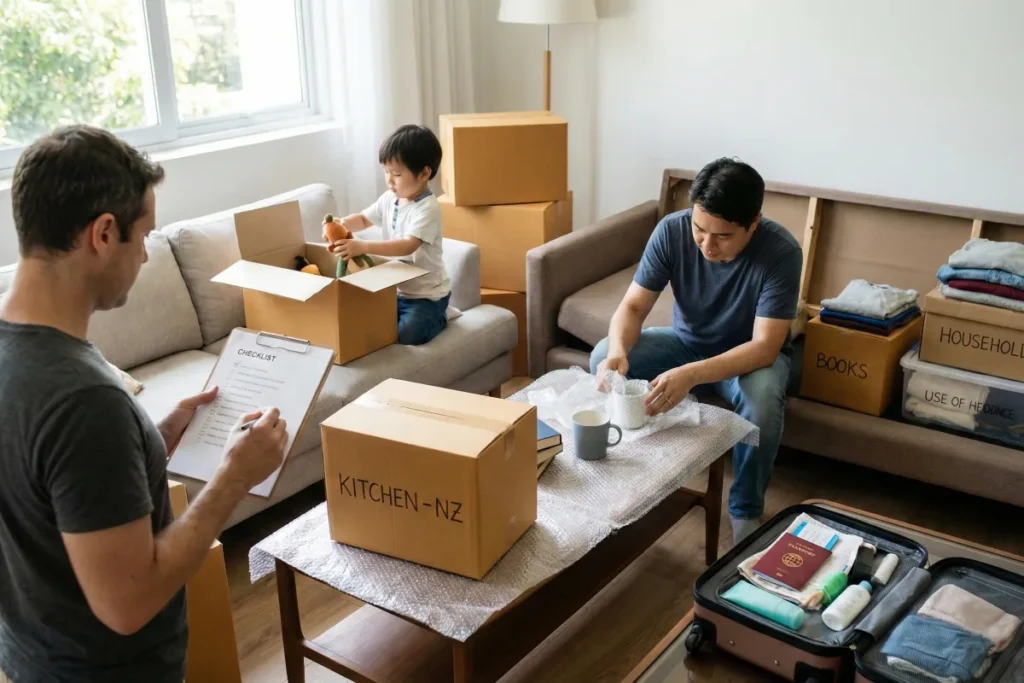
Feeling overwhelmed by the thought of packing up your entire house for a move to New Zealand? You’re in the right place, because this guide breaks down exactly how to tackle it.
We’ll show you how to set realistic timelines, pack space by space, and handle restricted items that could cause problems at the border. You’ll also learn practical strategies that keep things organised without the last-minute panic.
Families across New Zealand have used these same steps to make their moves smoother. If you want similar results, read on to get your packing plan sorted the right way.
Your NZ Moving Checklist: Where to Start

Start with your timeline, your supplies, and a proper declutter. These might seem basic, but they determine the rest of your move to New Zealand.
So get them right.
Set a Realistic Timeline
Aim for at least six to eight weeks before moving day to get everything sorted.
You might be wondering why so long. The reason is it gives you breathing room for unexpected delays like shipping times, customs checks, or paperwork hiccups.
To make this work, write down your moving dates and set weekly goals for each room. Tick things off as you go.
Gather Your Packing Supplies
You’ll need sturdy boxes, packing tape, bubble wrap, and markers to get started. These basics keep your belongings protected and make the whole packing process more organized and efficient.
Once you’ve got your list, stock up well in advance so you’re not scrambling at the last minute. You can find what you need at local supermarkets or hardware stores, and it’s worth asking around for free boxes, too.
From our experience moving families to NZ, towels and linens work just as well as bubble wrap for padding. This backup comes in handy since most people underestimate how much packing material they’ll go through.
Sort and Declutter First
Before you pack anything, reduce what you own. The reason is simple: shipping costs add up quickly, and less stuff means less expense and effort.
So focus on old clothes, unused kitchen gadgets, reading materials, and bulky furniture. If you haven’t touched it in a year, it’s probably time to let it go.
From there, decide what to keep, donate, or sell. Platforms like Facebook Marketplace make it simple to offload household goods while earning a bit of cash. With the clutter gone, you’ll be ready to pack in an organised and stress-free way.
How to Pack Room by Room

Pick one room, pack it completely, then move to the next. It’s best to start with spaces you use less often and leave daily essentials for last. This method keeps boxes organised and progress steady.
The breakdown below covers it all.
Start With Items You Rarely Use
Items you don’t use often, like seasonal clothes, spare bedding, books, and decorations, are the easiest place to start. These won’t disrupt your daily routine, and packing them first gets progress moving early.
As boxes start filling up, the process feels less overwhelming. You’ll see results quickly, which keeps motivation high.
But don’t pack everything just yet. Save essentials like toiletries, kitchen basics, and work gear for the last few days. This way you’re not digging through packed boxes while still living in the house.
Pack Fragile Items With Extra Care
Wrap fragile items individually using protective padding or newspaper. This stops them from knocking against each other during transit.
We’ve seen too many cracked plates from careless packing. What helps is cushioning breakable items on all sides and filling empty gaps so nothing shifts during the long journey.
When loading your boxes, place heavy items at the bottom and lighter ones on top. Mark them clearly so professional movers handle them with care.
Label Every Box Clearly
Every box needs the destination room and a quick note of contents. This detail saves you from tearing through everything to find what you need later.
Coloured tape or stickers make sorting even easier. Movers can then place boxes in the right spot without stopping to ask, and unpacking becomes much quicker.
We’ve helped hundreds of households settle into New Zealand. What we’ve learned is that a clear labelling system shaves hours off the process.
What About Restricted Items in NZ?
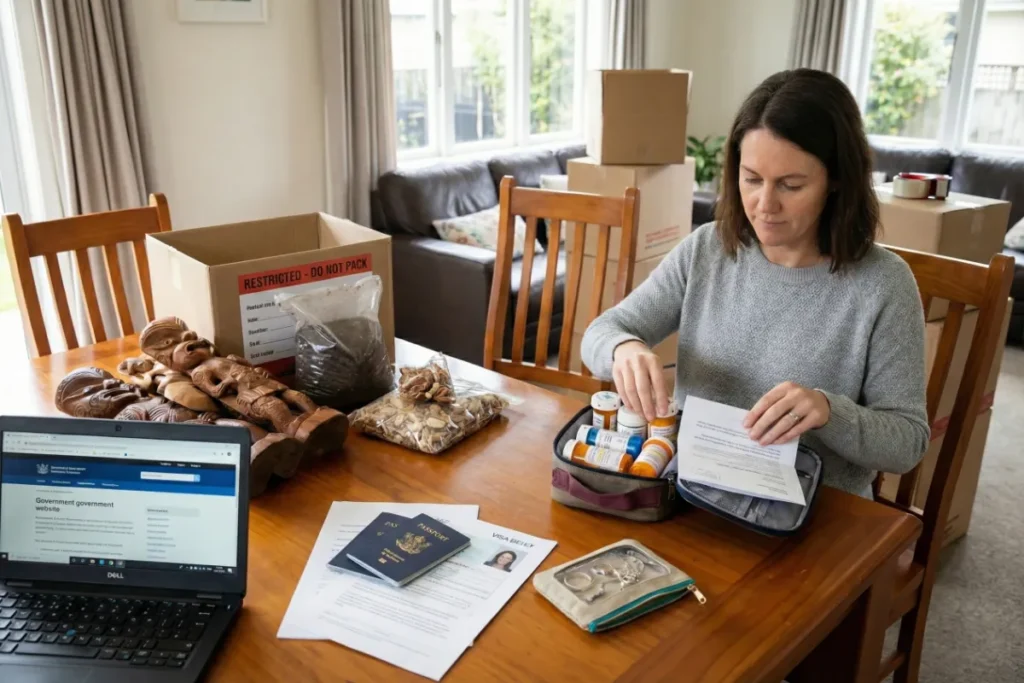
Some items can’t come into New Zealand at all, and others need declaring at the border. This includes food, organic materials, and medications, which all fall under strict biosecurity rules.
Getting this wrong can mean fines or delays, so these are worth knowing before you pack.
Food and Organic Materials
New Zealand blocks most food and organic materials to protect its environment from pests and diseases. For example, fresh produce, meat, dairy, seeds, and plants are all banned or heavily restricted.
But wait, there’s more to it. Even dried goods, spices, and wooden products need to be declared or disposed of. And yes, we’ve watched people try to sneak things through customs before and they never end well.
So before you pack, check the MPI website for a full list of what’s restricted.
Medications and Prescriptions
Some common overseas medicines are classified as controlled substances in NZ. Believe it or not, codeine-based painkillers and sleeping tablets fall into this category.
If you rely on any of these, bring a doctor’s letter. Without proper documentation, not only could you face holdups at the border, but certain medications may also be considered restricted under New Zealand law.
So keep prescriptions in their original packaging and store them in your carry on luggage with your travel documents.
Valuables and Important Documents
Passports, visas, birth certificates, insurance policies, and jewellery are essential and difficult to replace from overseas. Losing any of these personal belongings mid-move could delay your arrival in New Zealand.
In fact, this happens more often than you’d think. That’s why it’s best to keep important paperwork, travel documents, and valuables in your hand luggage rather than packing them with the movers.
For extra security, store digital and physical copies separately. Save them in the cloud so you have access from anywhere.
Make Your Move to New Zealand Hassle-Free
Moving your family to New Zealand takes careful planning. Without a system, packing can quickly become stressful and disorganised. The good news is that a step-by-step approach keeps everything on track..
This guide covered realistic timelines, gathering supplies, decluttering, and packing space by space. We also looked at restricted items and keeping your valuables safe during the journey.
If handling all this isn’t your cup of tea, let us take care of it. Contact us today for a stress-free move to your new home in New Zealand.